Skinociti.
First American brand to put 3D texture you can actually feel on glass and aluminum slabs.
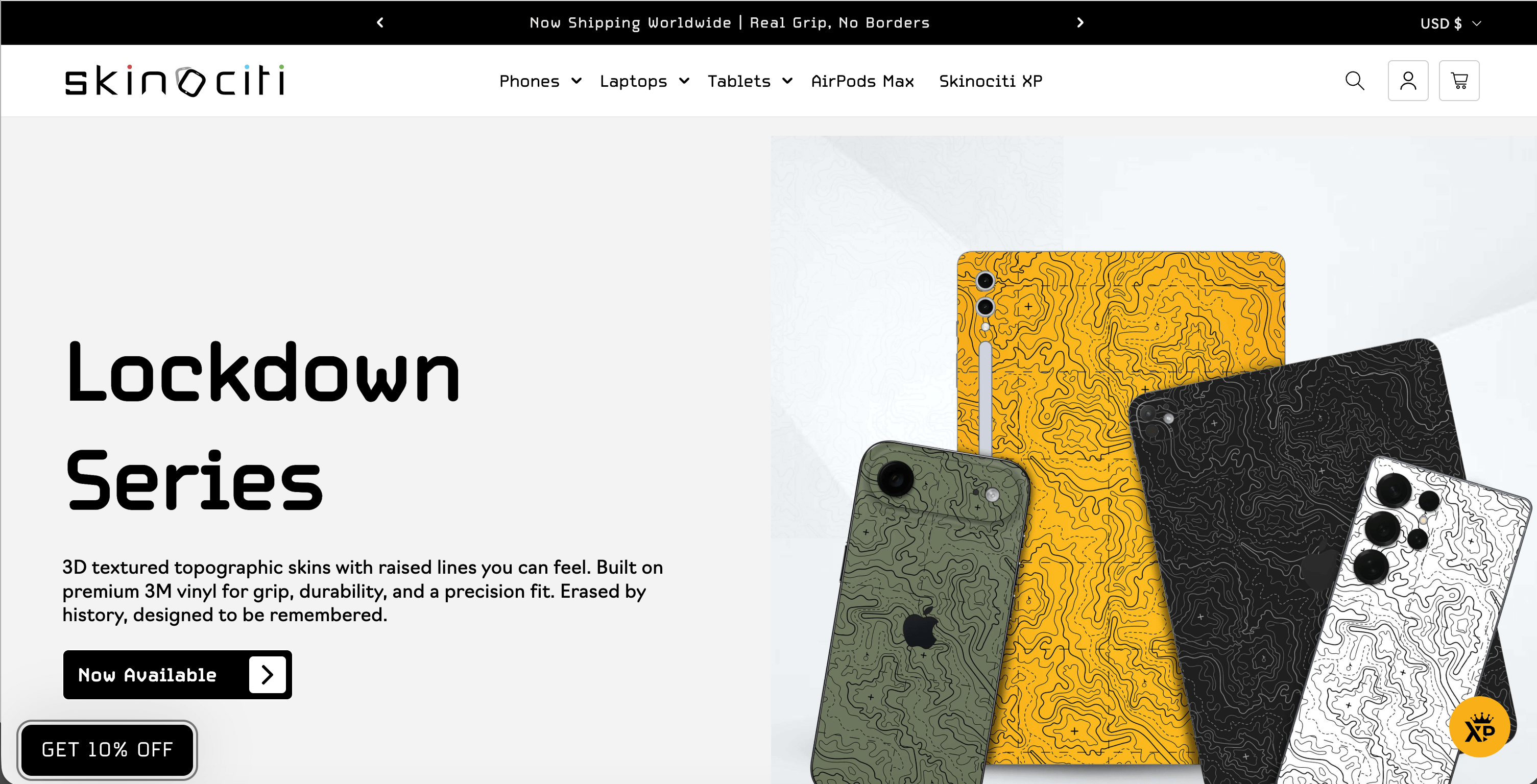
Device skins in the US market are a sea of flat vinyl. Carbon fiber prints. Fake leather. The kind of stuff that looks decent in renders and bad on a real phone in a real coffee shop.
I wanted to bring 3D texture — actual depth you can read with your fingers — to the American market. The catch: the brand had to feel premium, not "Etsy seller of the month." The site had to convert without screaming. The packaging had to survive a USPS sorting facility.
Built the brand from voice up. Set the tone of an unemployed intern — confident, sarcastic, refusing to use the word "elevate" or "premium experience" — and let everything downstream inherit from that.
Designed the storefront on Shopify with a custom Liquid theme. Stripped the standard e-commerce shrieking. Replaced it with editorial type, real product photography, and a checkout that feels less like a mugging.
Wired up Klaviyo with eleven production email flows: welcome, browse abandonment, cart abandonment, checkout abandonment, post-purchase, winback, loyalty, sunset — the whole ladder. Each one with a proper A/B-tested subject line strategy and copy that doesn't apologize for existing.
Ran the photography myself — three-light setup, 200x S key, 60Bi rim, RGB accent — to get texture macros that actually communicate the product's point.
"Most device skin brands sell stickers. We sell skins you can read with your fingers."
 product · texture macro
 storefront · shopify
Live and scaling. Repeat purchase rate above category average. Email-attributed revenue inside the top quartile of the niche. The brand voice has become its own moat — competitors are starting to copy the cadence, which is the highest compliment a brand voice can get.